Case Study 1 - e-Learning Module
Optimizing the learning experience with an interactive, accessible and inclusive online module
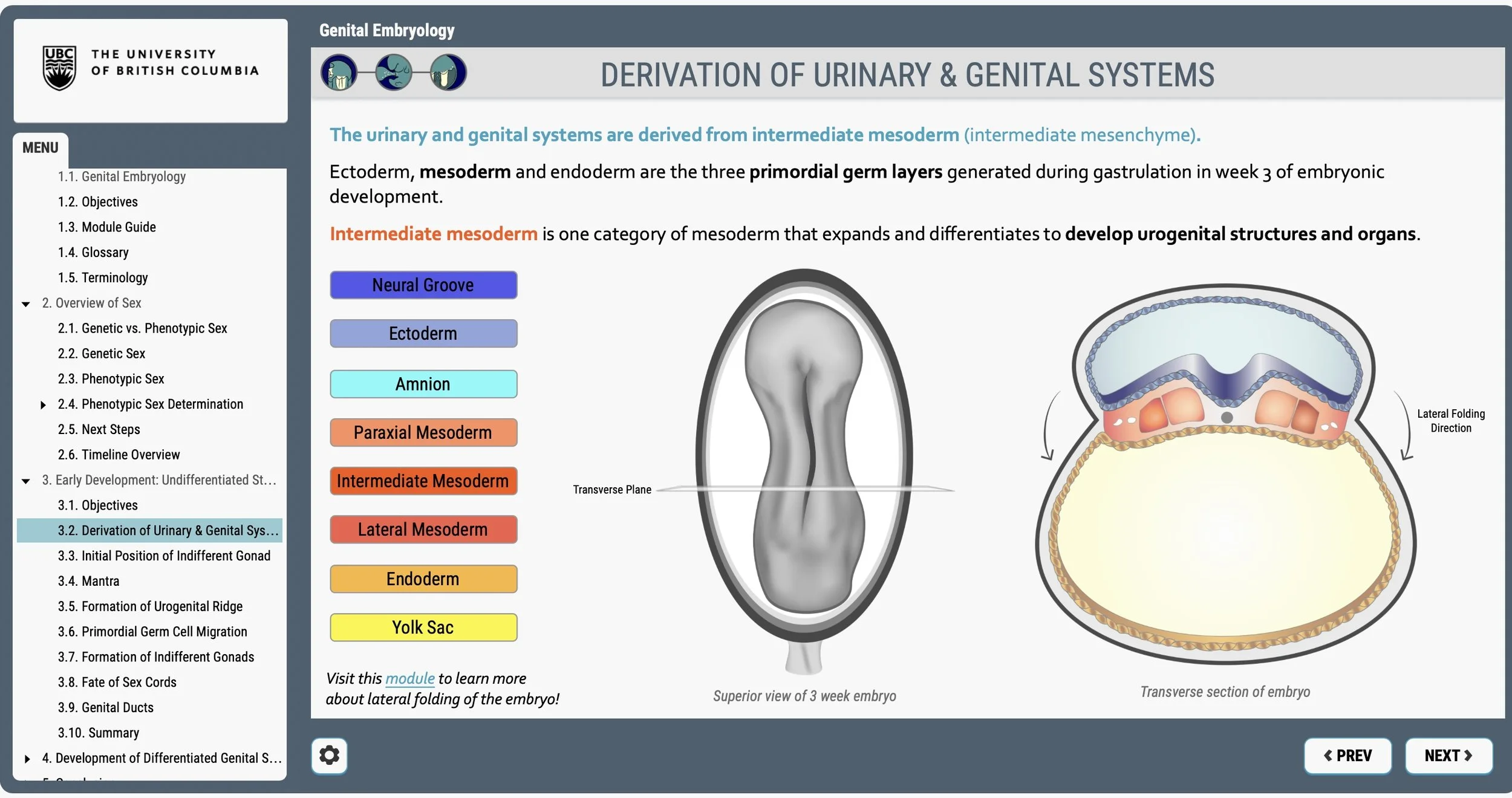
Screenshot of Clinical Anatomy’s module interface featuring biomedical illustrations as well as navigation and interactivity features
Core elements
Knowledge translation
Learner-centred design
Biomedical illustration
2D animation
User experience design
Accessibility design
Inclusive design
Layout and graphic design
Digital media
Capstone project
‘Embryology: Development of the genital system’, an interactive e-learning module for the University of British Columbia’s (UBC) open education resource hub Clinical Anatomy
Partners
UBC’s Hackspace for Innovation and Visualization in Education (HIVE) team
Dr. Valerie O’Loughlin, Professor of Anatomy, Cell Biology and Physiology, Indiana University School of Medicine
Student designers from UBC’s Biomedical Visualization and Communication program: Bonnie Wang, Robyn Cunningham-Dunlop and Carmen Chen
Roles
In collaboration with student and instructional design teams:
Graphic designer and colourist
Biomedical illustrator and 2D animator
Accessibility and inclusivity designer
User experience designer
Poster designer
Tools
Adobe Creative Suite (Illustrator, Photoshop, Animate, Acrobat)
Microsoft 365 (PowerPoint, Word, Teams)
Miro (for project management, work flow and prototyping)
Design challenge
To develop an accessible online interactive learning module about the embryonic development of the genital system for upper undergrad and first-year medical students. The goal is to promote accurate, inclusive and safer health care through redesigned embryology education with learners at the centre of the module design.
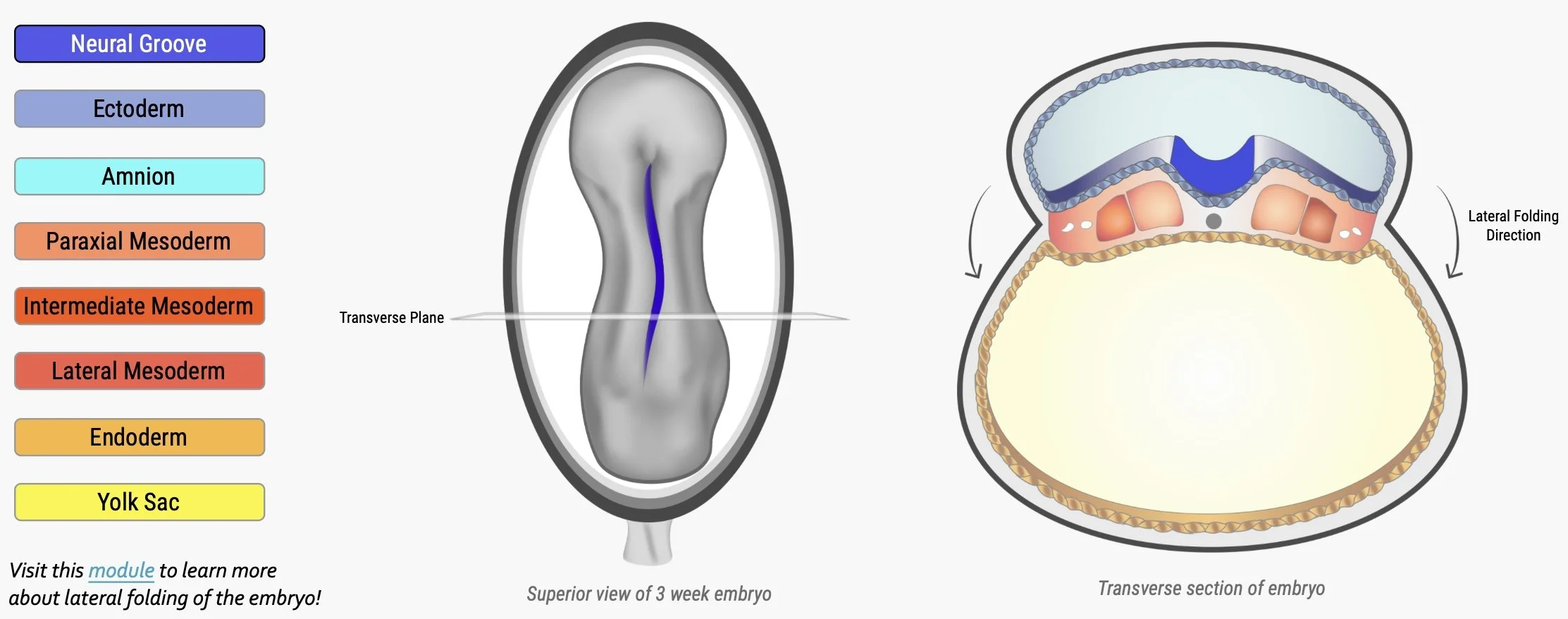
Example of a button interactivity element on Clinical Anatomy: highlight of the anatomical structure (i.e. the embryonic neural groove) in high-contrast colour when clicked
Solution
The team implemented Mayer's principles of multimedia learning to support learner understanding of complex concepts through simplified graphics, clear text and visual alignment, a guiding timeline for overall narrative context, segmented information, as well as introductory and summary pages.
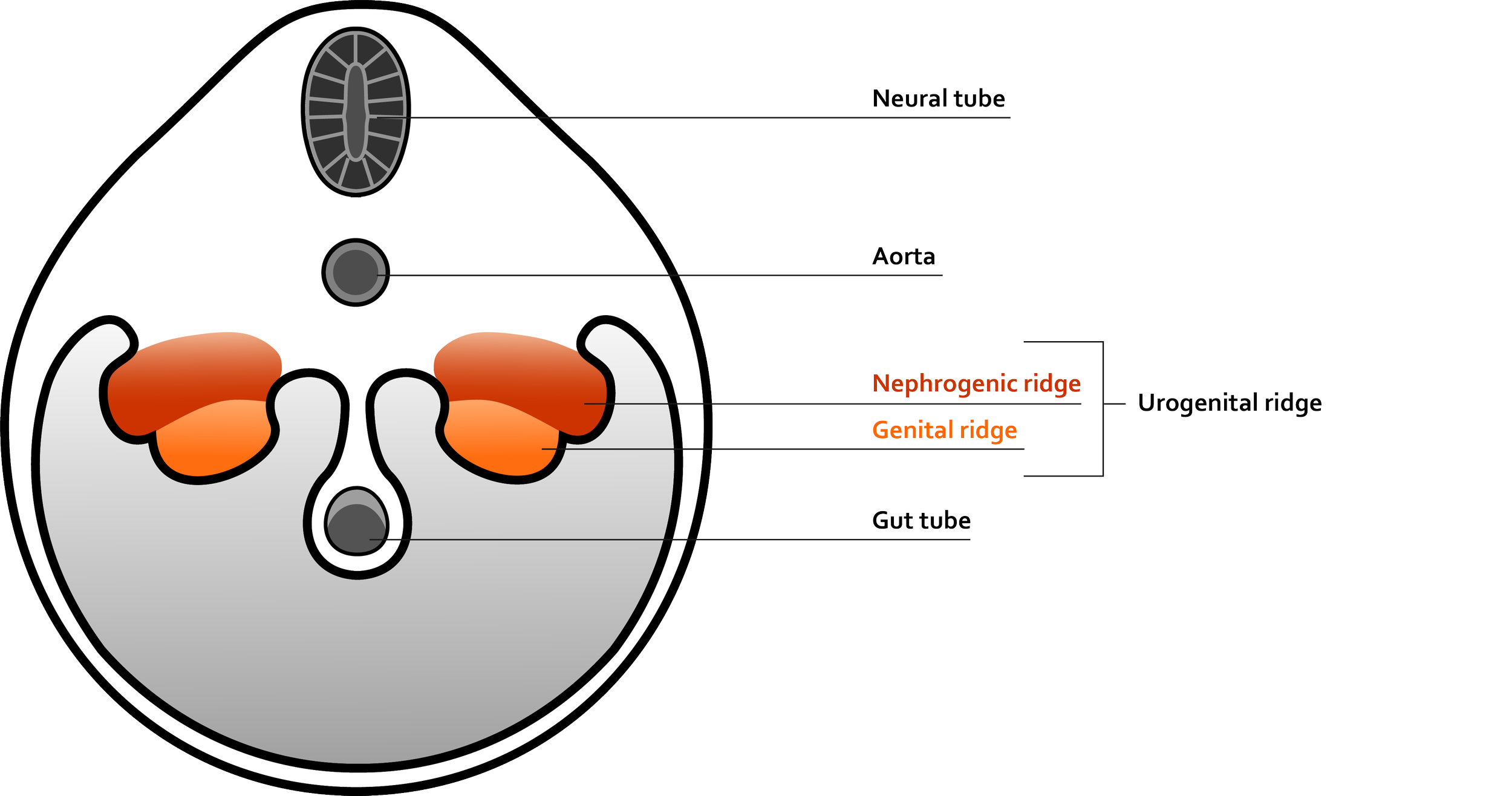
Biomedical illustration of the transverse cross section of an embryo highlighting the anatomical structures of the urogenital ridge
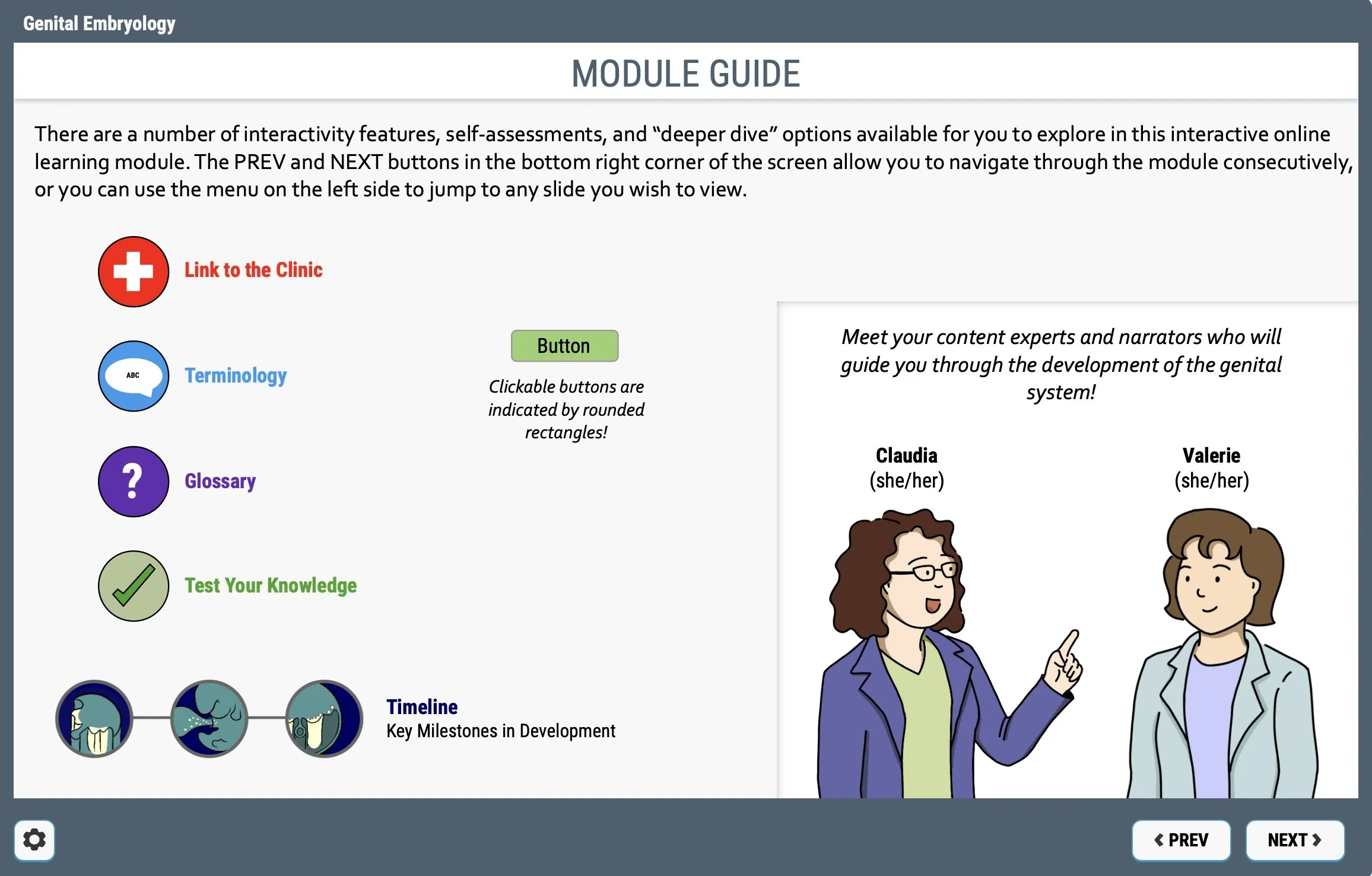
The learning experience was optimized through interactivity with elements such as click-through animations, button-dependent colour highlights of anatomical structures, an accessible navigation menu, and a ‘choose your own adventure’ structure including deeper dive opportunities throughout the module.
Accessible and inclusive design priorities were established through language, colour and visualization choices (i.e. ‘XX and XY individuals’; higher contrast elements) with content arrangement into Articulate Storyline guided by the Web Content Accessibility Guidelines.
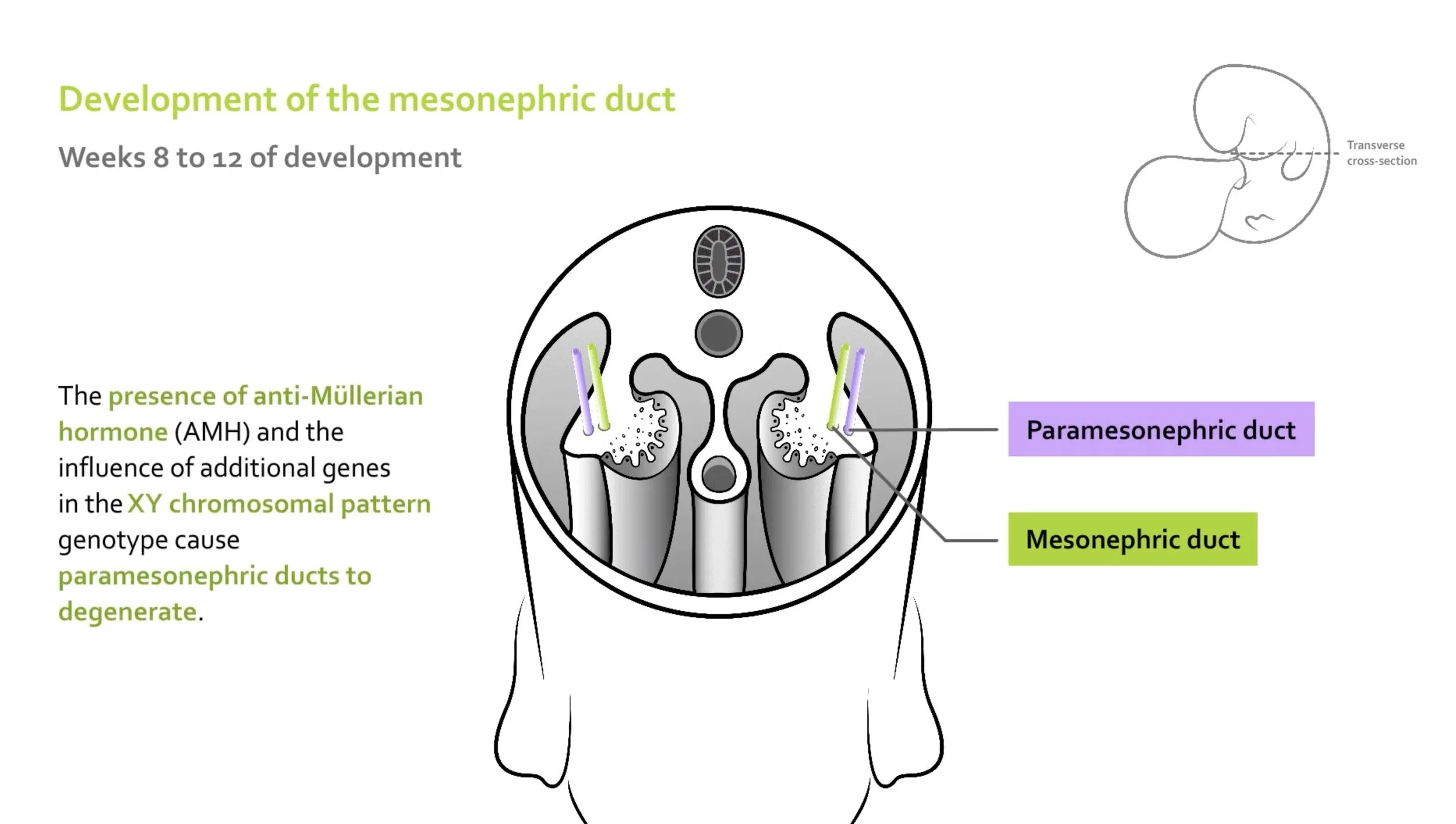
Animation frame from Clinical Anatomy’s e-learning module on the development of mesonephric ducts in an XY individual
Impact
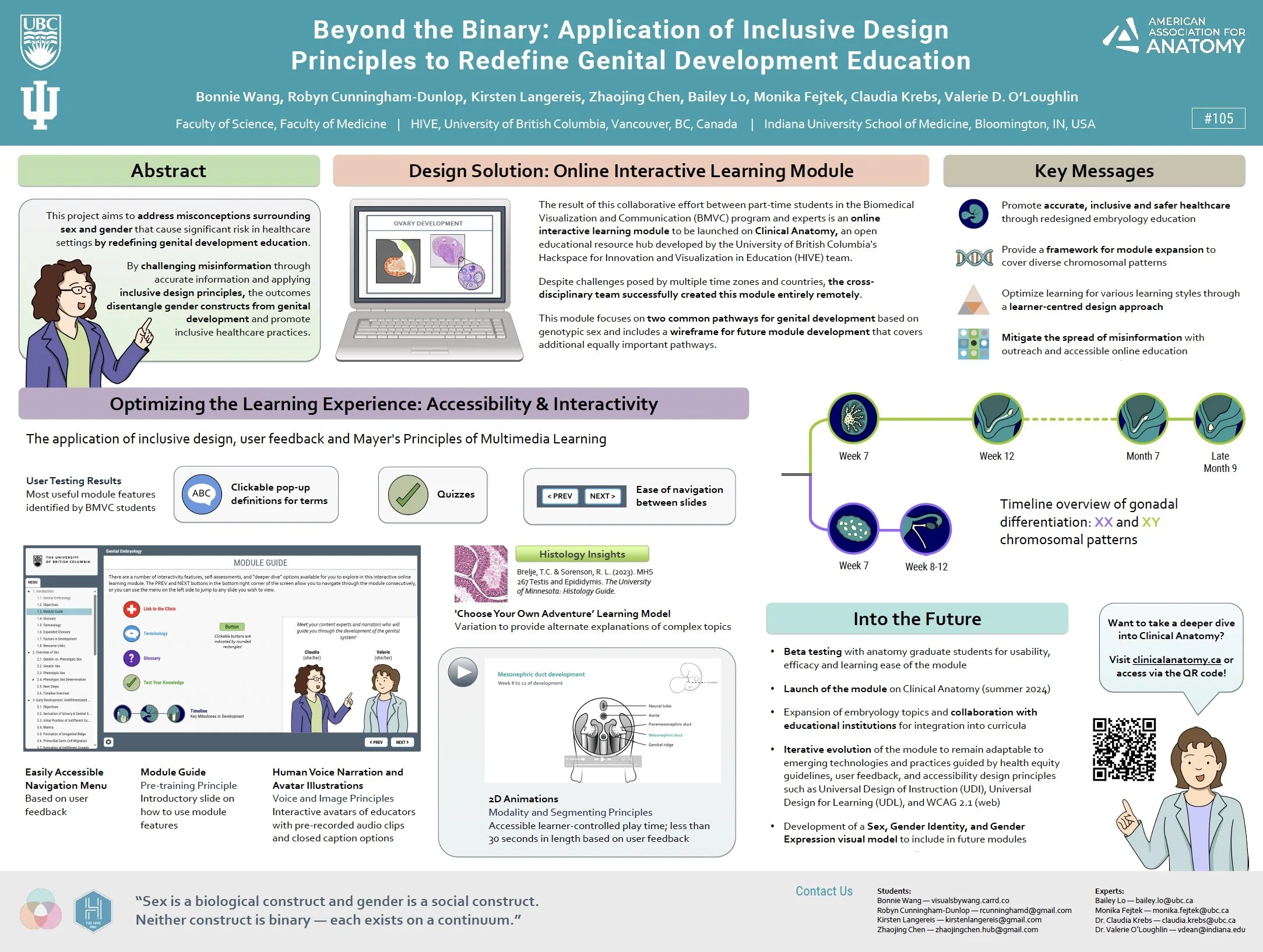
Poster design for presentation at the American Association for Anatomy’s annual Anatomy Connected conference in 2024
In addition to its online presence on Clinical Anatomy, the project and its “beyond the binary” education has been presented at conferences in Ontario (Anatomy Connected 2024) and Alberta (International Association for Medical Science Educators 2025).
The capstone project also included a wireframe for future module development including those discussing intersex variations in embryos.
To view the module in full, visit: clinicalanatomy.ca/embryology/GenitalEmbryology/story.html
For the list of references, please continue to scroll.
References
Flierman, S., Tijsterman, M., Rousian, M., & de Bakker, B. S. (2023). Discrepancies in Embryonic Staging: Towards a Gold Standard. Life, 13(5), 1084. https://doi.org/10.3390/life13051084
Moore, K. L., Persaud, T. V. N., & Torchia, M. G. (2020). Before we are born: Essentials of embryology and birth defects. Elsevier, 246.
Sadler, T.W. (2019). Langman's medical embryology, 14th ed. Philadelphia: Wolters Kluwer, 232.